

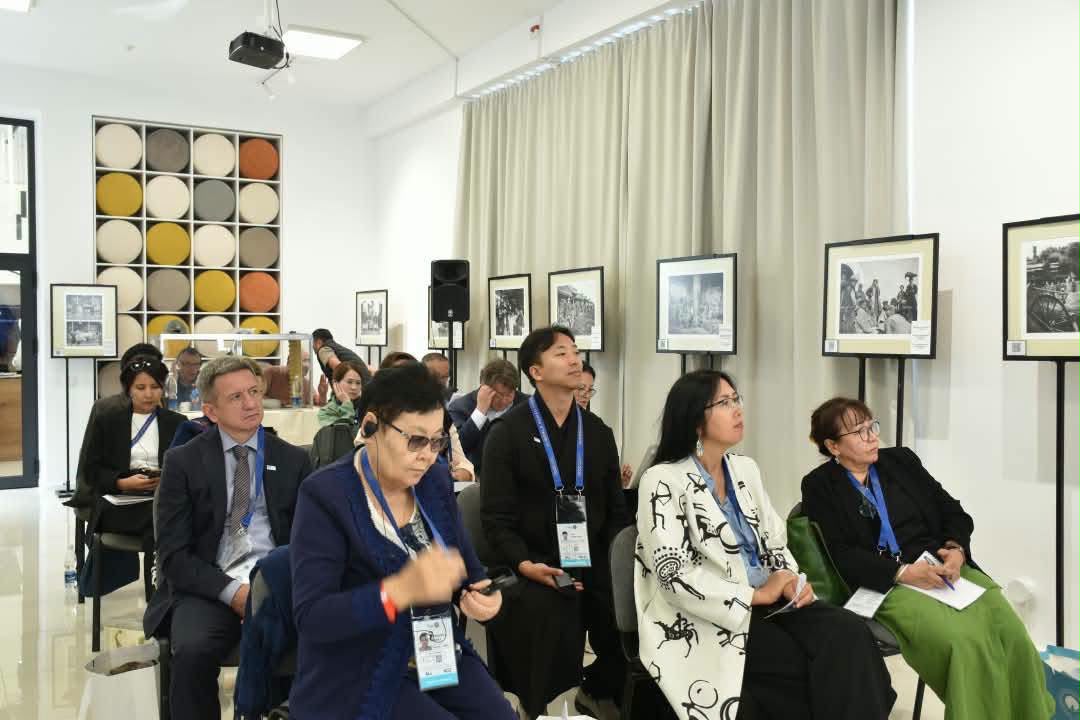
The fourth session of the international research conference “Nomadic Civilisations: Heritage, Paradigms and Prospects” discussed the political and legal systems of nomadic societies.
Seventeen speakers from Azerbaijan, the United States, the United Kingdom and Kyrgyzstan took part in the session. They examined how governing bodies, mechanisms of administration and legal norms took shape in nomadic societies.
Particular attention was paid to traditional forms of public participation in important political decisions. The role of the kurultai as an institution of collective deliberation and of choosing a supreme ruler was discussed, along with traditional mechanisms of accountability of those in power before society.
Customary law of nomadic peoples formed a separate topic. Participants examined how norms based on custom and tradition were formed and applied to regulate social relations, and how they developed into a durable legal practice.
Participants noted that studying the political and legal heritage of nomadic peoples makes it possible to explore historical forms of public administration, legal culture and the interaction of authority and society more deeply, and to understand their significance in a contemporary scholarly and public context.