

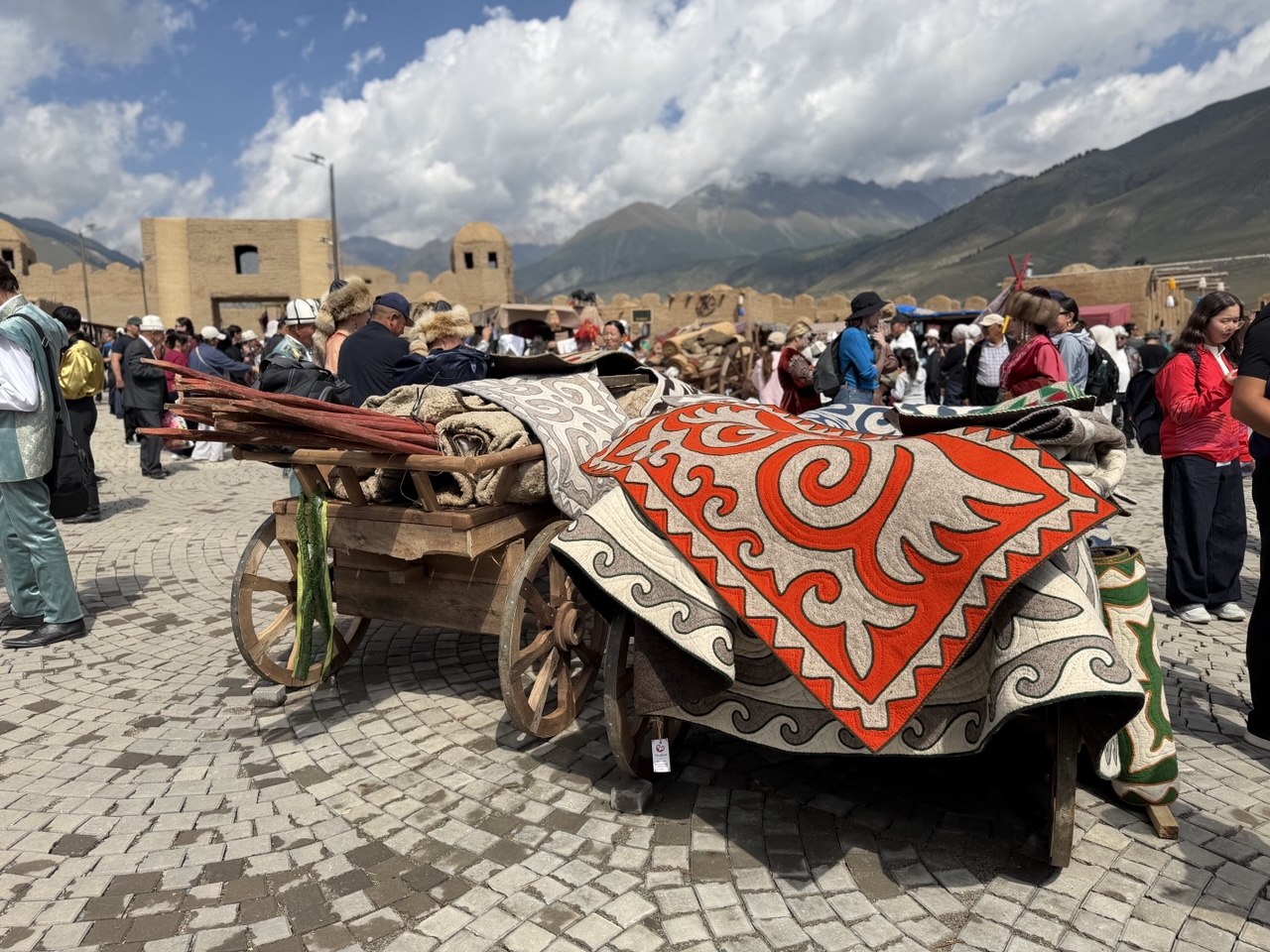
In Kyrchyn the ethno-bazaar has brought together traditional crafts, national cuisine and a contemporary interest in the culture of Kyrgyzstan
KYRCHYN, 2 September 2026. The ethno-bazaar in the Nomads' Universe village in the Kyrchyn valley continues to work as one of the venues of the VI World Nomad Games. Guests can not only buy the work of Kyrgyz craftsmen but also get to know traditional crafts, national cuisine and the culture of a nomadic people.
The stalls offer decorative and applied art, felt goods, carpets and shyrdaks, elements of national dress, headwear, bags, accessories, souvenirs and other handmade items.
Next to the craft rows is a national cuisine area where dishes are cooked in front of the visitors. The setting itself creates the atmosphere: the rows stand among stylised adobe buildings decorated with traditional ornament and textiles.
Wooden carts, open hearths, national costume and handmade goods become part of a single space in which a modern visitor can see the everyday life of the nomads.
The ethno-bazaar draws both Kyrgyz guests and participants and visitors of the World Nomad Games from different countries. For many, the encounter with Kyrgyz culture happens directly — through talking to the craftsmen, looking at their work and tasting the food.
The Nomads' Universe, however, is conceived as far more than a temporary site for the Games. The village brings together around 500 yurts in 15 yurt camps representing the regions of Kyrgyzstan and various ethno-cultural themes.
According to the organisers, the site can take up to 100,000 visitors a day. Building it was part of Kyrgyzstan's preparation for the VI World Nomad Games, the large international event running from 31 August to 6 September 2026.
The Nomads' Universe is to be used afterwards as a permanent venue for cultural and international events, keeping the infrastructure in use and continuing to introduce guests of Kyrgyzstan to the history, traditions and contemporary development of nomadic culture.
The ethno-bazaar in Kyrchyn is therefore not only a place of trade but a space of living cultural exchange — where tradition is shown not as a museum piece but as part of present-day life.